Google Reviews: The Timing, The Ask, And What Actually Gets Ignored
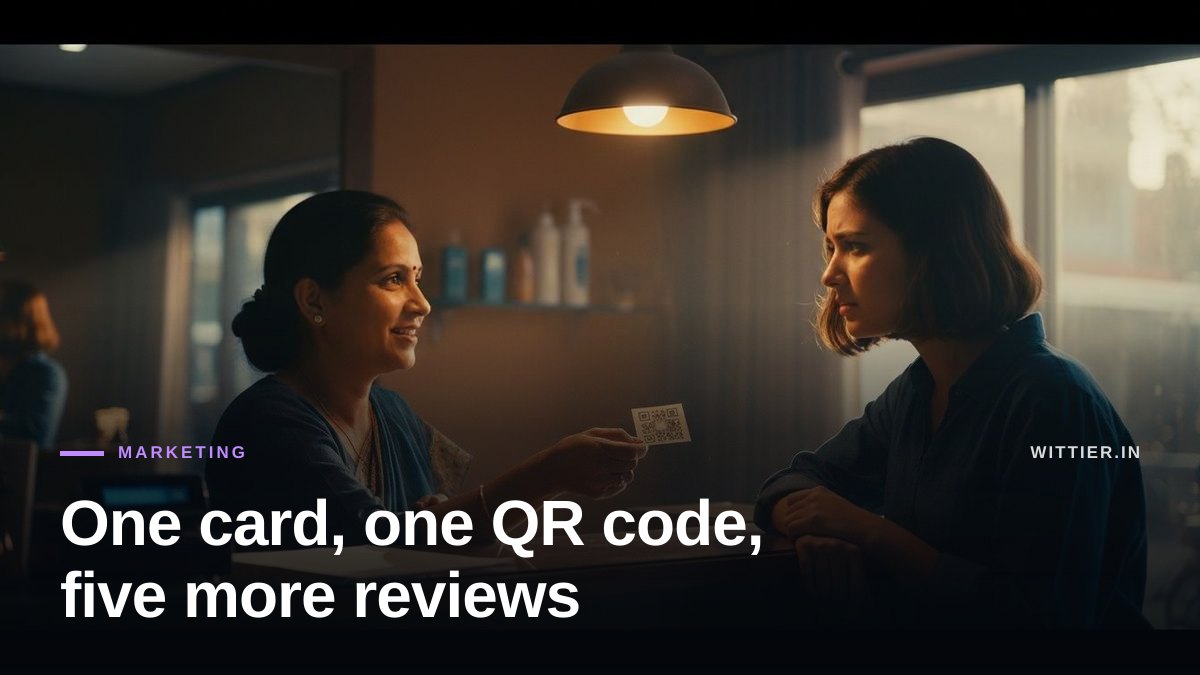
- Ask for reviews within 48 hours of a happy customer moment, not randomly.
- A short link or QR code cuts review abandonment by half compared to asking for a Google search.
- Negative reviews ignored or deleted fast become your biggest problem; thoughtful replies are your fix.
The timing problem most businesses get wrong
You ask for reviews whenever you remember. Your customers give them when they remember. That's not a strategy, that's hope.
The real window is 24 to 48 hours after a genuinely good experience. A customer has just left your store, received their order, finished a service, or felt heard after a complaint fix. That's the moment their opinion is strongest and they're still thinking about you.
Waiting a week? Gone. Asking months later in a random email blast? Feels like spam.
Make it stupidly easy
Typing "[Your Business Name] Google reviews" is friction. Most people won't do it.
Here's what works:
- A short custom Google review link (Google My Business lets you generate one)
- A printed QR code on your receipt, invoice, or delivery note
- A text or WhatsApp link right after checkout (one click)
That's it. No forms, no redirects, no "please search for us first."
One hospitality owner in Delhi we worked with saw review submissions jump 3x after switching from verbal asks to a QR code on every bill. People with phones will scan. People without will ask you. Simple.
What you say matters less than when you say it
You don't need a script. "We'd love to hear what you think" works as well as "Your feedback helps us grow."
But here's what kills it:
- "If you liked us, please leave a review" (only asking happy customers, but sounds defensive)
- Telling customers what rating to give (Google flags this)
- Offering discounts or freebies in exchange for reviews (algorithm penalty, trust destroyed)
- Making it conditional ("Review us, then I'll help you")
Just ask. Naturally. After something good happened.
Replies: The part that actually matters
A review without a reply from you is a missed conversation. Google's algorithm notices replies. Customers notice them more.
Positive reviews? Reply within a week. Thank them specifically (mention a detail they said). Keep it brief. You're showing other shoppers you listen.
Negative reviews are where you either build trust or destroy it.
- Don't delete or report fake reviews. Google removes them or you look afraid.
- Don't argue or defend in public. Message the reviewer privately and offer to fix it.
- Don't ignore them. Every unanswered complaint makes the next shopper worried.
- Do acknowledge the problem, take responsibility, and offer next steps.
A Pune e-commerce founder got a one-star review blaming poor packaging. Instead of deleting it, she replied: "This shouldn't have happened. DM us your order number and we'll send a replacement with better care. We're fixing this." The reviewer updated the review to four stars. That conversation is worth more than five fake five-stars.
What never to do
Fake reviews, bot reviews, or paying for reviews will eventually backfire. Google's detection system is brutal. Your account gets flagged, all reviews get marked as unreliable, and new customers trust you less.
The cost isn't worth the short-term bump.
A thought on how we help
If you're building a website or app, we wire in review widgets, QR code generation, and reply dashboards so managing feedback doesn't become a tab you ignore. But honestly, the advice above works whether you have a website or not.
General information only. For compliance questions on reviews and ratings, consult a lawyer.
Need a website that is compliant and secure from day one?
We build data-driven websites, web apps and platforms with compliance and security handled properly. Tell us about your project.
Get a free quoteThis article is general information, not legal advice. For your specific situation, please consult a qualified professional.